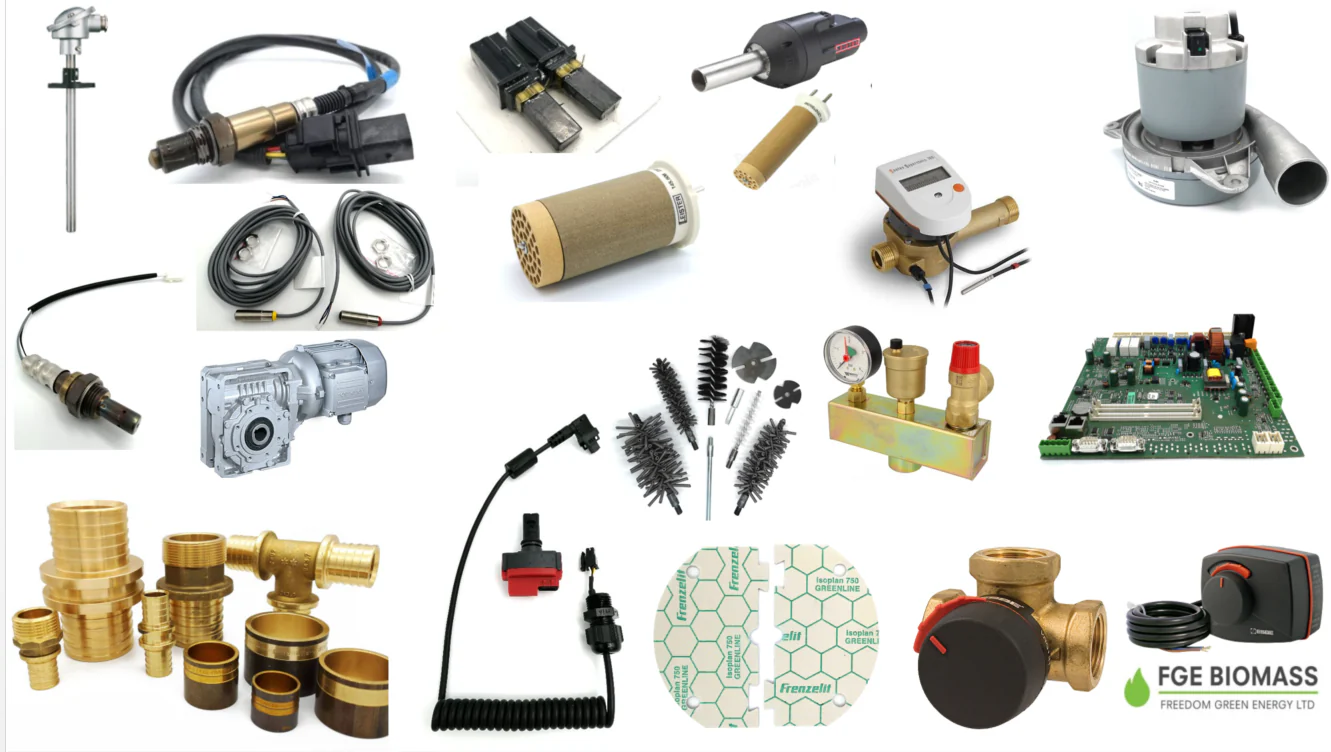
Spare-parts strategy rarely gets the attention it deserves — until the moment a critical component fails and the plant discovers the replacement has a three-month lead time. In a concentrated solar power (CSP) plant, where a single failed part can idle a whole loop or the power block, the parts on your shelf are as much a part of availability as the maintenance crew.
The challenge is that stocking everything is wasteful and stocking nothing is reckless. Effective spares management is about knowing which components genuinely need to be on hand, in what quantity, and how to keep them available across a plant lifetime that may outlast the original suppliers.
Classify parts by criticality
The foundation of any spares strategy is a criticality assessment: for each component, what happens to production if it fails, and how quickly can it be replaced? Two questions — consequence and recoverability — sort the entire inventory.
- Critical, long-lead: failure stops production and the part takes weeks or months to source. These must be held on site.
- Critical, short-lead: failure stops production but the part is readily available locally. Hold a minimum buffer.
- Non-critical: failure is tolerable or has redundancy. Stock lightly or order on demand.
This classification is what prevents both failure modes — the empty shelf when a critical pump fails, and the warehouse full of capital tied up in parts that could have been ordered next-day.
The obsolescence problem
CSP plants are built to run for decades. The control systems, drives, sensors, and specialised mechanical components installed at commissioning were not. Over a plant's life, manufacturers discontinue product lines, revise designs, and sometimes leave the market entirely — and a spare that was a simple reorder at year two can be unobtainable at year twelve.
Obsolescence is a slow-moving risk that becomes an emergency only when ignored. The plants that handle it well treat it as an ongoing engineering task rather than a procurement surprise.
Staying ahead of obsolescence
- Maintain a live register of critical components and their supply status, flagging anything approaching end-of-life.
- Make last-time buys of critical spares before a product line is discontinued, where storage allows.
- Qualify alternative or equivalent parts in advance, so a substitution is engineered, not improvised under pressure.
- Use reverse engineering and local manufacturing for components that can no longer be sourced from the original supplier.
The best time to solve an obsolescence problem is years before the part actually fails.
Local sourcing and reverse engineering
For older plants, and for those operating far from the original equipment manufacturers, local sourcing is often the difference between a quick repair and a lengthy import delay. Many mechanical spares — brackets, seals, structural elements, wear components — can be manufactured to specification locally once the drawings or a physical sample exist.
Reverse engineering extends this to parts where documentation has been lost. By measuring and characterising a failed or spare component, an equivalent can be produced that meets the original's form, fit, and function. For a plant facing obsolescence on a key component, this capability turns an unobtainable part back into a manageable one.
Tie spares to maintenance data
A spares programme should not be static. The maintenance history tells you which components actually fail, how often, and under what conditions — and that record should continuously reshape stocking levels. Parts that fail more than expected justify a deeper buffer; parts that never fail can have their holdings reduced and the capital released.
Managed this way, spare parts stop being a cost centre to be minimised and become a lever for availability. Pack N Move Renewable Energy supplies spare parts for solar thermal and CSP power plants and supports operators with the criticality assessment, obsolescence planning, and local-sourcing capability that keep those parts available when they are needed.
All articles.jpeg)